
A bus counter closing procedure is the checklist your agent follows when a shift ends and the window shuts. It decides whether tomorrow starts with clean numbers or with a mystery from tonight.
This guide is for the owner or operations lead who sets the routine. It walks through a practical bus counter closing procedure, from the last sale to the handover note, without inventing any figures or promising what your own system may not do.
Why a Bus Counter Closing Procedure Matters
Most cash and ticket problems are found at closing, not at the moment they happen. If nobody checks at the end of a shift, an error stays hidden until a month-end report shows a gap nobody can trace.
A written bus counter closing procedure makes the check routine. Every agent does the same things in the same order, so the difference between counters tells you something real instead of reflecting personal habits.
Closing Is a Control, Not Paperwork
Treat the closing routine as part of your cash and inventory controls. It confirms that what the system says was sold matches what is in the drawer and what is on the buses.
That is also why it should not be skipped on a busy night. The busier the shift, the more likely an error slipped in.
Who Should Own It
Name one person per shift who is responsible for closing. If everyone is responsible, nobody is, and the checklist gets done from memory or not at all.
At a small station this may be the same agent who opened. A second person should still review the totals if you can arrange it.
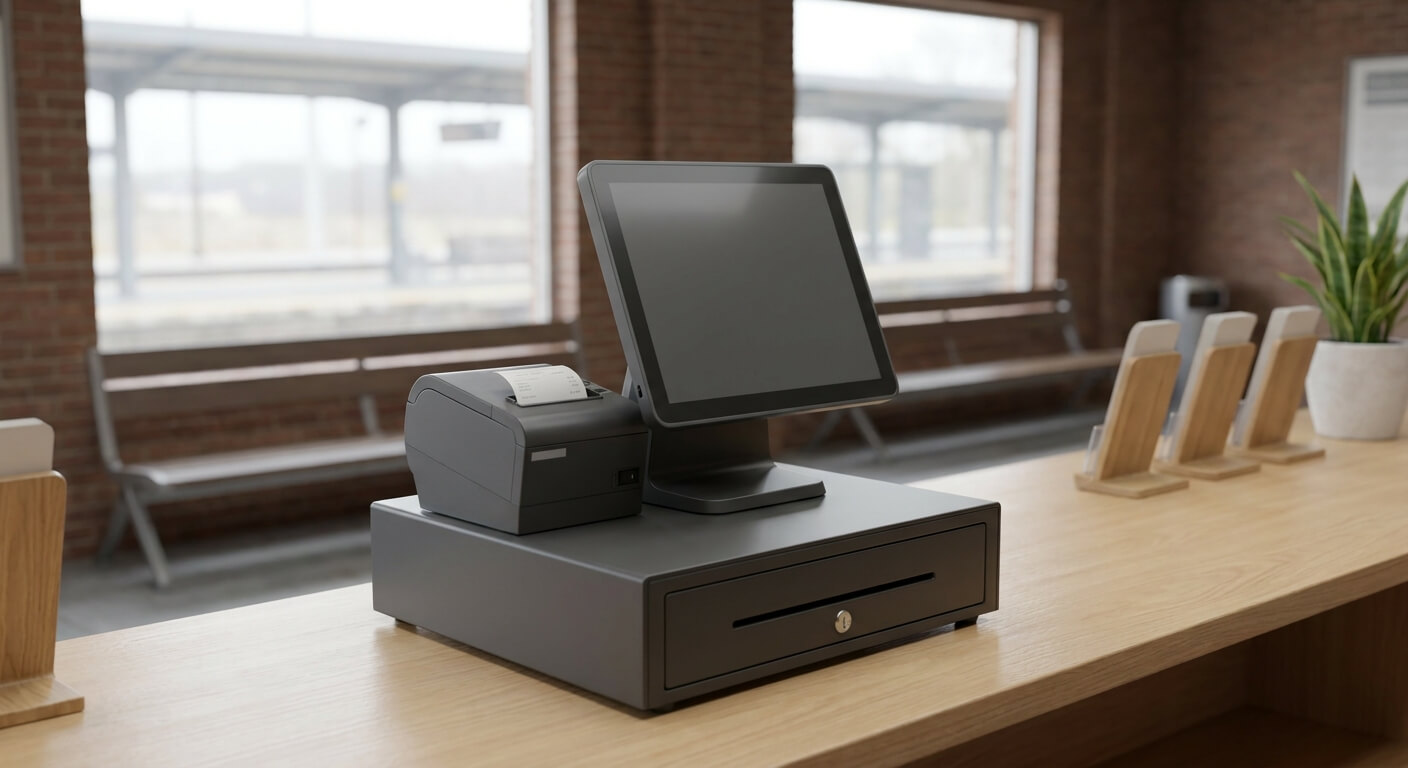
Step 1 and 2: Stop Sales and Reconcile the Queue
Close the window to new sales first. Selling while counting is how totals drift. Pin a note on the window so late passengers know where to go, such as another sales channel.
Then finish anything half done. An open transaction, a held seat or a pending payment should be completed or cancelled before you count.
Finish Open Transactions
Check for sales that were started but not completed. Decide for each whether it becomes a sale or is released. Leaving them open creates phantom seats in the next day’s inventory.
Our notes on a bus seat hold timer explain why held seats should not hang around.
Post a Clear Closed Sign
Tell passengers how to buy after closing. Point to your online channel or the next open window. A bus counter closing procedure that includes this saves staff from the awkward conversations at the glass.
Step 3 and 4: Count the Drawer and Pull the Report
Count the cash in the drawer without looking at the system total first. Counting blind avoids the temptation to nudge a number to match. Record the count, then compare.
Next, pull the sales report for the shift. UBT lists point-of-sale, ticket validation, inventory control and real-time reporting together, so ask your vendor which report best fits a shift close.
Blind Count First, Then Compare
Write down the cash amount before opening the report. Any difference should be noted with the time and the likely cause, not silently fixed.
A small difference found today is far easier to trace than the same difference found a month later, when nobody remembers the shift.
Match Cash, Card and Other Payments
Compare each payment type against its own total. Cash against the drawer, card against the terminal batch, and any other method against its own record.
If you do this every shift, the monthly job described in the guide to bus ticket reconciliation becomes a quick confirmation rather than a hunt.
Keep the Routine Short Enough to Finish
If the bus counter closing procedure takes too long, people skip parts of it at the end of a tiring shift. Aim for a routine that a trained agent can complete without rushing, and cut anything that does not catch a real error.
Review it with the people who use it. Agents usually know which step is redundant and which one has saved them from a mistake. Their feedback keeps the bus counter closing procedure practical rather than theoretical.
Step 5: Check Voids, Refunds and Reissues
Review every void, refund and reissue made during the shift. Each should have a reason and an approver. Anything without one is the first thing to question.
This review takes a few minutes and catches most of the strange entries. It pairs well with your daily sales report, which lists the same activity for the day.
Look for Patterns Within the Shift
Several refunds in a row, or a cluster of voids near the end of the shift, may point to a staffing or training issue. A good bus counter closing procedure makes those patterns visible.
Escalate What You Cannot Explain
If something does not add up, do not guess. Flag it to the supervisor with the facts you have. An honest note is worth more than a number that was adjusted to look right.

Step 6: Secure the Cash and Write the Handover
Move the cash to the place your policy sets, whether that is a safe or a deposit bag. Record who handled it and when. The count, the report total and the difference should all appear on one handover sheet.
Then write a short note for the next shift. Mention anything unfinished, any passenger waiting for a callback, and any equipment that misbehaved.
What the Handover Note Should Say
Keep it to a few lines. Unusual events, open items and the status of the drawer are enough. Long notes are not read, and short ones are.
Hand Over the Equipment
Check the terminal, printer and scanner before leaving. A device that is low on paper or battery is a problem for the next person unless you flag it now.
If you have rules for boarding, tie them in with your bus boarding check-in process so the sales side and the gate side use the same records.
Adjust for Peak Days
Holidays and event days bring more sales, more exceptions and more tired staff. On those days, consider adding a mid-shift cash drop and a second person at closing. Our notes on managing staffing during ticket spikes cover the planning side.
The same bus counter closing procedure still applies on peak days. It simply needs more hands to finish on time.
A Starter Bus Counter Closing Procedure to Adapt
The six steps below are a draft. Confirm every line against your own system, cash policy and staffing before you adopt it.
- Stop new sales and post a closed sign with other ways to buy.
- Finish or release every open transaction.
- Count the drawer blind, then compare with the system total.
- Match cash, card and other payments to their own totals.
- Review voids, refunds and reissues for reasons and approvers.
- Secure the cash and write a short handover note.
Test It for a Week
Run the bus counter closing procedure for one week and note where staff slow down or skip steps. Fix the wording rather than blaming the person.
After that, review a sample of handover sheets once in a while. A routine nobody reads becomes a routine nobody follows.
Final Thoughts on Your Bus Counter Closing Procedure
A solid bus counter closing procedure is short, ordered and owned by a named person. It stops sales, finishes open items, counts blind, matches every payment type, reviews exceptions and hands over cleanly.
Write your version, try it for a week and adjust it. The reward is a set of numbers you can trust, which makes every later decision about staffing, pricing and schedules easier.
If you want to see how a ticketing system brings sales, validation, inventory and reporting together, request a walkthrough of UBT’s ticketing platform and bring your own closing routine. UBT is free with no obligations: if you do not like it, there is no cost.