
Every operator eventually discovers that the bus ticket refund process is where support time quietly disappears. A rider cancels through one channel, disputes a fare through another, and the ticket agent who picked up the call has to reconstruct what happened before deciding what to do next.
Multiply that by a normal week of cancellations, no-shows, and schedule changes, and refund handling becomes the slowest recurring task on the ops desk. Not because the rules are complicated, but because nothing in most bus ticketing systems writes them down in one place.
This isn’t a training problem. Agents usually know the policy. What they don’t have is a system that already knows which record is correct, which rule applies, and what happened the last time a similar refund was handled.
That gap is what makes the bus ticket refund process feel harder than it should be, week after week.
Where the bus ticket refund process breaks down first
The trouble rarely starts with the refund itself. It starts with the lookup. A booking made online carries one record, a phone booking carries another, and a walk-up sale at the counter might only exist in a register tape until someone re-enters it.
Before an agent can even start the bus ticket refund process, they are often piecing together which record is the real one.
That lookup step is where most of the time goes, and it happens before any judgment call about the refund amount even begins.
If your team currently pulls up three different logs to answer one refund dispute, that step disappears once every channel writes to the same record instead of three separate ones.
Why manual judgment slows down every bus ticket refund process call
Once the booking is found, the harder part starts: deciding what the rider is actually owed. Should this cancellation get a full refund, a partial one, or store credit toward a future trip?
Does the fare class purchased carry a cancellation fee, and did the rider cancel early enough to avoid it? Right now, an agent is often making that call from memory or from a printed policy sheet taped near the counter.
That works until two agents apply the same policy differently on the same day, or until a rider who called in the morning gets a different answer than one who called in the evening.
A bus ticket refund process that depends on individual judgment will always produce inconsistent outcomes, even when every agent is acting in good faith and trying to follow the rules as written.
Reconciling refunds across the counter, phone, and online channels
Even after a refund is approved, the work isn’t done.
Someone still has to match the refunded ticket against the original sale, confirm the seat or schedule slot was released back into inventory, and make sure the accounting side reflects the reversed charge, whichever channel the money originally came through.
Operators who run counter sales alongside phone and online booking usually end up reconciling these by hand at the end of the shift or the end of the week, cross-checking a paper log against a payment processor report against a booking spreadsheet.
Every extra sales channel adds another version of the same reconciliation problem to sort out, and the bus ticket refund process ends up repeated three times instead of once.
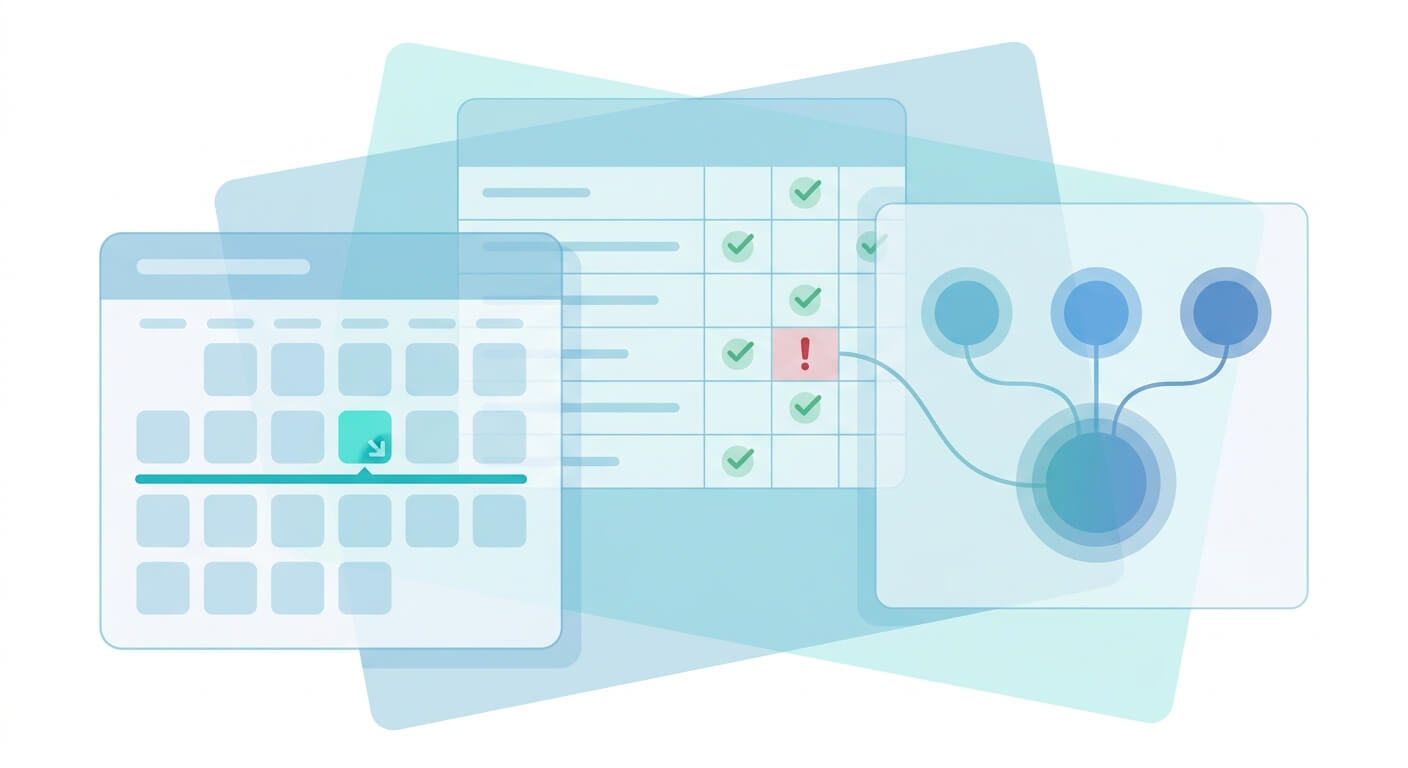
Turning your bus ticket refund process into rules the system enforces
The fix isn’t asking agents to memorize policy better. It’s moving the policy into the system that already holds the booking, so the same conditions get applied the same way regardless of who is handling the call or which channel the ticket came from in the first place.
A cutoff window is the clearest example: cancel more than a set number of hours before departure and the fare is refunded in full; cancel inside that window and a fee applies automatically.
The purchase channel can be a condition too. A ticket bought online might carry different exchange terms than one sold at a counter, and the system can apply that distinction without an agent having to look it up manually.
Because the seat and schedule inventory already lives in one place across online and offline sales, a refund releases that seat back into availability the moment it’s processed, instead of sitting in limbo until someone updates a spreadsheet by hand later that day.
Handling exchanges and partial refunds without slowing down the line
Not every request is a full cancellation. A rider might want to move to a later departure instead of a refund, or accept a partial credit rather than wait for money back to a card.
A well-defined bus ticket refund process treats these as the same kind of rule as a full refund: a condition based on timing and channel, not a judgment call made fresh each time.
When exchange and partial-refund conditions live in the same place as the cutoff-window rule, an agent handling a walk-up rider isn’t choosing between “look busy figuring this out” and “just wave it through.”
The system already has the answer, and the agent’s job becomes confirming it and completing the request.
This matters most during peak travel weeks, when call volume spikes and there isn’t time to double-check a policy sheet between calls.
A bus ticket refund process that already accounts for exchanges, partial credit, and full refunds under one set of conditions holds up under that kind of volume instead of buckling into inconsistent answers.
What a defensible bus ticket refund process looks like when disputes happen
Disputes are where an undocumented process becomes a real liability. A rider claims they cancelled in time and were charged anyway. A supervisor gets asked to explain why one cancellation was refunded in full and another wasn’t.
Without a record, the answer comes down to whoever remembers the call, and that isn’t a position you want your team defending a refund decision from.
What holds up instead is a record of who took the action, when they took it, which rule was applied, and which channel the original ticket came through.
That doesn’t require a fresh investigation every time a rider disputes a charge; it requires the system to log the decision at the moment it’s made, not reconstruct it afterward from memory.

Bringing the whole bus ticket refund process onto one record
None of this requires retraining agents on a longer policy document. It requires the lookup, the rule, the inventory update, and the log entry to happen inside the same system instead of across a register, a spreadsheet, and someone’s memory of the policy from last month.
Operators who enforce a cutoff window inside the system, rather than leaving it to an agent’s discretion, usually find that the number of policy disputes drops simply because the same answer comes out every time a rider calls in.
That consistency is what turns a stressful weekly task into a routine one, and it’s the difference between a bus ticket refund process your team dreads and one they barely notice.
See how a shared refund record fits your routes
If your team is still piecing together refund decisions from a register tape, a phone log, and an online booking report, it’s worth walking through how a shared ticketing record would handle the bus ticket refund process for your specific routes and fare rules.
Bring your current cancellation policy to the conversation and we’ll show you how those conditions would be configured. Request a walkthrough to see it applied to your fleet.