
Onboard bus entertainment used to mean bolting a screen to every headrest and hoping the DVD player still worked. That approach is expensive to install, expensive to maintain, and a hard sell for an operator who is not sure passengers will even use it.
There is a simpler version that skips the hardware entirely: stream to the device the passenger already carries.
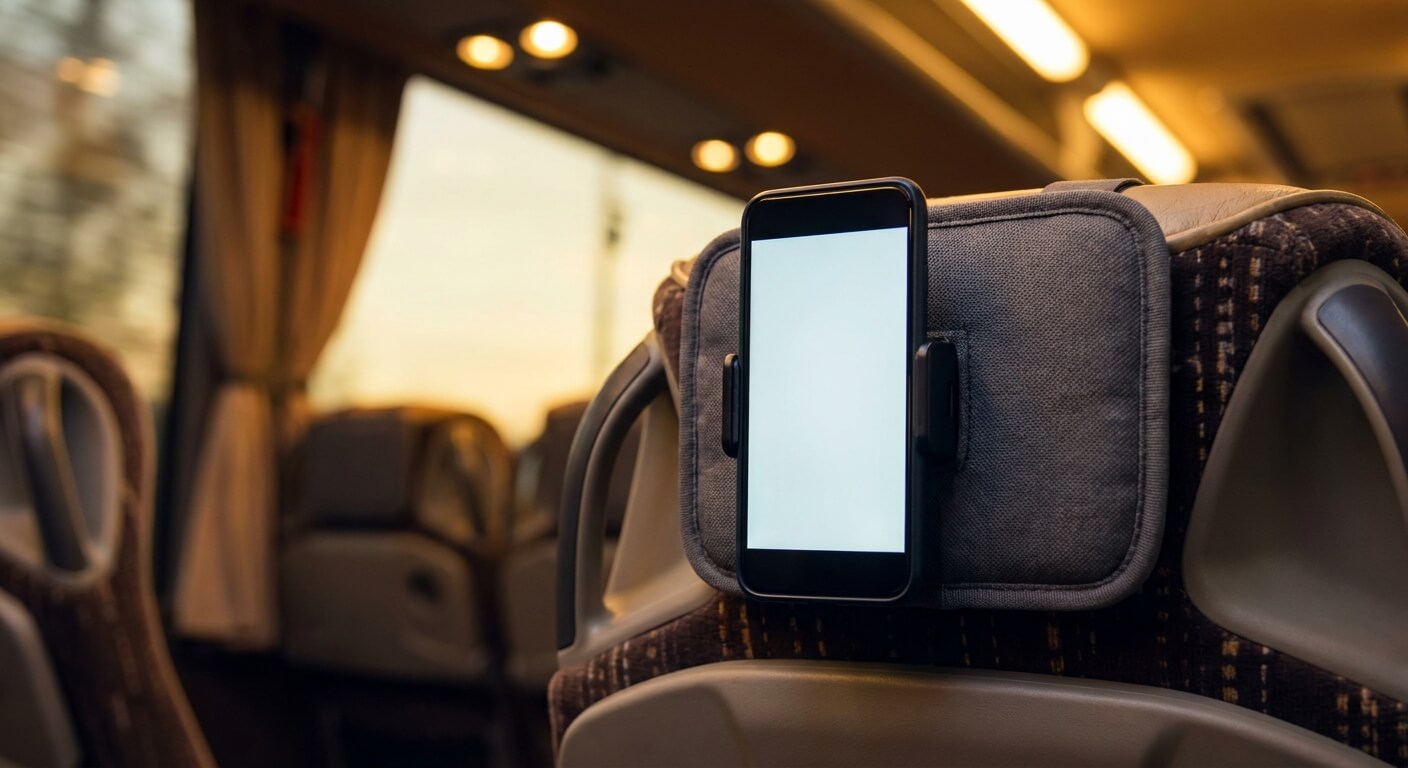
What onboard bus entertainment looks like without new hardware
UBT’s platform offers inflight-alike experiences through automated SMS boarding reminders, ETA tracking, and onboard movie streaming over mobile devices. The streaming piece is the entertainment layer, and it runs on the phone or tablet a passenger already has in their hand.
There is no seatback screen to install, wire, or replace when it cracks two months in.
For an operator, that changes the math. A fleet-wide seatback retrofit is a capital project with a multi-year payback, and it locks you into whatever hardware you bought the day you bought it.
A mobile-device version is closer to a feature you turn on than a fleet you refit. The passenger supplies the screen; the system supplies the content pipeline.
That also means it scales the same way whether you run three coaches or thirty. There is no per-seat hardware cost to multiply, no warranty schedule to track by vehicle, and nothing bolted to a headrest that a maintenance crew has to work around during a routine cabin clean.
Why it matters more than it looks on paper
A three-hour route with nothing to do is a three-hour advertisement for the alternative: driving, or a competitor with a nicer cabin experience. Passengers do not always choose a bus company on price alone, especially on routes where a car or a rideshare is a real option.
The ride itself is part of what they are buying, not just the destination.
Onboard bus entertainment will not fix a late departure or a rough ride, and it is not a substitute for the operational basics.
But paired with the things that do work, like schedules that hold and drivers who show up on time, it is one more reason a rider picks the same operator next trip instead of shopping around again.
Think about how riders actually spend a long stretch on a coach today: staring at a phone with a weak signal, guessing how much battery is left, or trying to nap through road noise.
A stream they can pull up on demand competes with all three of those defaults, and it does so without asking the passenger to download anything before the trip.

Pairing entertainment with information, not replacing it
Streaming is the part passengers notice first, but it sits next to two other pieces of the same mobile experience: automated SMS boarding reminders and ETA tracking.
A rider who gets a text when boarding opens and can see where the bus actually is does not need to stand at the curb watching for headlights.
That is worth more goodwill than the movie catalog, and it is worth reading the guide to automated SMS boarding reminders if that piece is not set up yet.
The same live-position data that powers ETA tracking is what a dispatcher watches from the office. If you are still deciding whether a shared tracking feed is worth the setup, the breakdown in real time bus tracking for passengers and dispatchers covers what changes on both ends.
What to check before you turn it on
Confirm the content is licensed for the way you plan to use it.
Streaming to passenger-owned devices on a public route is a different licensing situation than a private in-flight system, and it is worth a direct answer from whoever supplies the content, not an assumption carried over from a different industry.
Check what it costs your onboard data connection. Video is heavier than a text reminder or a location ping, and a route with weak signal for part of the way will show that gap the moment several passengers try to stream at once.
Know that limit before a full coach finds it for you on a holiday weekend.
Ask how it fails gracefully. If the stream buffers or drops on a rural stretch, passengers should see a clear message, not a spinning wheel that makes the whole feature look broken.
A good rollout plan treats a weak-signal segment as a normal case to design for, not an edge case to ignore after launch.
Roll it out on one or two routes first, ideally the longer ones where a passenger has the most idle time to fill. Watch how often it actually gets used before deciding whether it is worth promoting fleet-wide. A feature nobody opens is not worth the support tickets it generates when it breaks.
Where it fits in your loyalty story
None of this needs to be marketed as a headline feature. It works better as a quiet upgrade riders discover for themselves, the same way boarding reminders and live tracking do.
If you already run a rewards program, this is one more small reason a repeat rider keeps choosing your line, and it costs nothing extra to maintain once it is switched on.
If you have not looked at how the pieces connect, the overview in what a bus passenger loyalty program needs to do is a useful next read.
Frequently asked questions
Does onboard bus entertainment need in-vehicle Wi-Fi
Not necessarily. Streaming can run over the passenger’s own cellular data, over onboard Wi-Fi if the fleet already has it, or a mix of both.
What matters is knowing which one your fleet actually relies on before you promote the feature, since that answer changes what to test on a weak-signal stretch of road.
Will it slow down the rest of the mobile passenger experience
Boarding reminders and ETA tracking are lightweight compared to video, so they should keep working even on a connection that is too weak for smooth streaming.
If a reminder or a location update starts lagging once streaming is turned on, that is a sign the two are sharing a connection that needs a closer look, not a reason to drop either feature.
Is this the same as a loyalty perk
Not exactly. A loyalty program rewards repeat purchases directly. Onboard bus entertainment is closer to a baseline experience improvement that makes every rider’s trip a little better, whether or not they are enrolled in anything.
The two can reinforce each other, but they solve different problems.
Ready to see onboard bus entertainment and the rest of the mobile passenger experience running against your own routes and fare rules? Request a walkthrough.